Gutter Services · Fort Pierce, FL
Gutter Guard Types, Fort Pierce, FL
Comparing gutter guard types Fort Pierce FL homeowners ask about: micro-mesh, perforated screens, reverse-curve, and foam inserts — what survives oak debris, palm fronds, and hurricane-volume rain, and what doesn’t.
- Micro-mesh vs. screens vs. reverse-curve vs. foam — honestly compared
- Rated for Florida debris: oak, pine, palm, and pollen
- Flow-tested for downpours, not just leaf coverage
Pick the right guard, not the most expensive one
Not Every Guard Survives Florida
Walk any home-improvement aisle and you’ll see five products all promising you’ll never clean a gutter again. Here’s the truth from the ladders: they perform very differently under live oaks, in 95-degree humidity, and during a two-inches-an-hour August thunderstorm. As part of our Fort Pierce gutter guard service, we install only the systems we’d put on our own homes — and we’ll tell you which cheaper options are fine, and which ones are money thrown at the roofline.
The debris mix here is the first filter. Northern guard reviews assume maple leaves and a fall shed; we deal with live-oak tassels that mat into felt, pine needles that knit into thatch, palm fronds that dam whole runs, and a pollen film that coats everything in spring. A guard that aces a maple-leaf test can fail completely against an oak tassel mat.
The second filter is water volume. Our cloudbursts dump more in twenty minutes than some states see in a month, and several guard designs trade flow capacity for debris blocking — fine in drizzle country, a waterfall over your fascia here. Every recommendation below is judged on both filters: what it keeps out, and what it lets through.
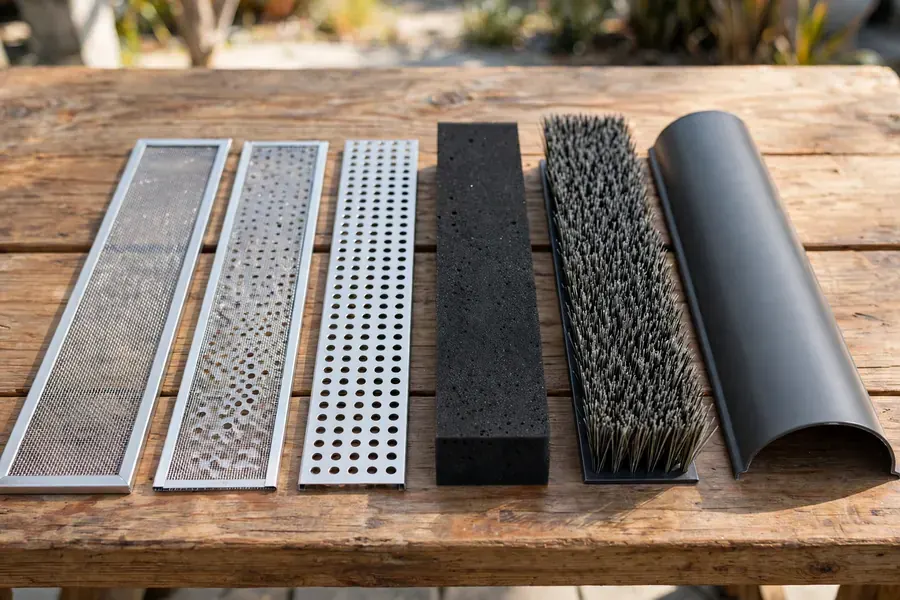
Gutter Guard Types, Fort Pierce, FL: The Five Contenders
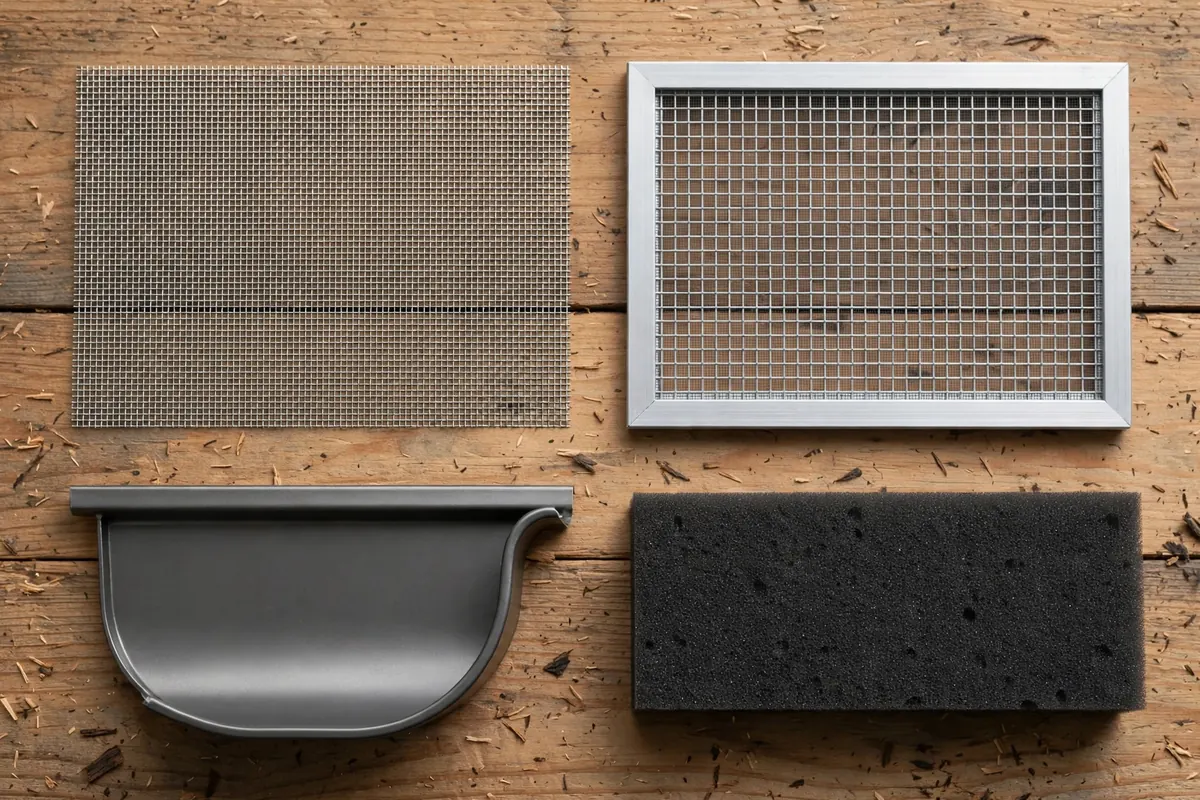
The five designs you’ll actually encounter: micro-mesh (a stainless or aluminum mesh with holes measured in microns, over a support frame), perforated screens (metal or plastic panels with visible holes), reverse-curve or surface-tension covers (solid covers that curve water in while leaves slide off), foam inserts (porous wedges that sit inside the trough), and brush inserts (bottle-brush cylinders laid in the gutter).
They fail in different ways, and the failure mode matters more than the marketing. Screens let pine needles spear through the holes and shingle grit wash in. Reverse-curve covers shed leaves beautifully but can overshoot in our downpours — water sheets right past the curve and over the edge. Foam inserts absorb our humidity, grow algae, and become a planted sponge. Brush inserts catch everything and clean out like a chimney brush full of oak tassels.
Micro-mesh fails least: the mesh is fine enough to stop needles and grit while the frame keeps flow capacity high, and stainless mesh shrugs off our salt air. It isn’t magic — pollen film and fine silt still need an annual rinse — but it’s the only design where the failure mode is “needs a rinse once a year” instead of “needs the guards removed to fix the gutter.”
Micro-Mesh: Why It Wins on the Treasure Coast
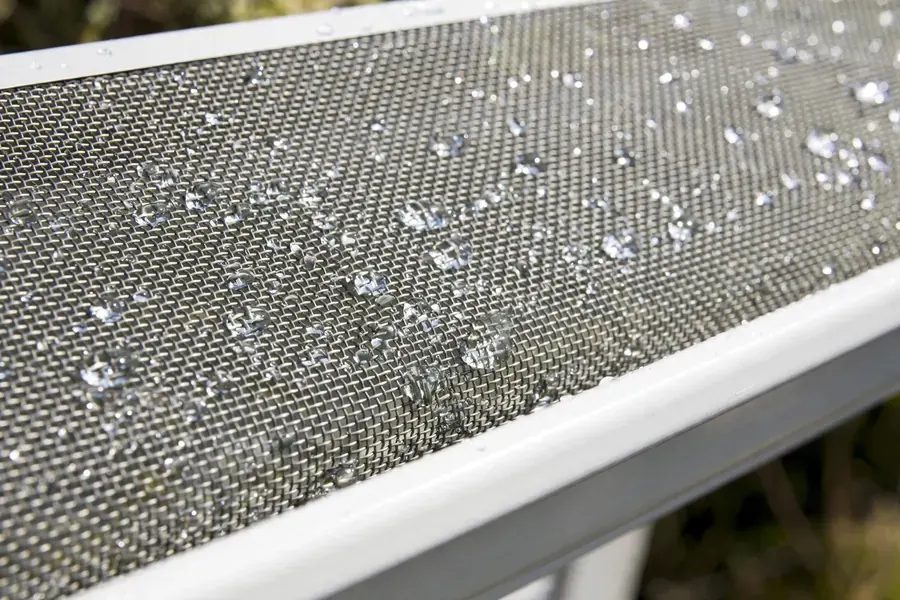
Start with the debris: micro-mesh apertures are measured in microns — small enough that pine needles can’t spear through, oak tassels can’t mat across, and roof grit washes through instead of lodging. The debris that defeats every other design here simply can’t get a foothold.
Then the water: because the mesh sits on a rigid frame that follows the gutter profile, the open area stays large — the system handles our two-inches-an-hour cloudbursts without the overshoot that plagues solid covers. In the August 4-o’clock thunderstorm, that’s the difference between a working system and a waterfall.
Then the climate: stainless-steel mesh doesn’t corrode in salt air off the Indian River Lagoon, doesn’t UV-degrade like plastic screens, and doesn’t absorb humidity like foam. On tile roofs — common from Lakewood Park to the island — micro-mesh installs without lifting tiles or disturbing the roof’s water-shedding design, which is more than some cover systems can say.
Screens, Reverse-Curve, Foam, and Brush: The Honest Trade-Offs
Perforated screens are the budget pick, and we’re honest about where they work: on a clear lot with no overhanging trees, a quality metal screen keeps out the big leaves for less than micro-mesh. Under live oaks or pines, needles spear the holes, tassels mat across the top, and you’re paying someone to clean the screens instead of the gutters — same ladder, different surface.
Reverse-curve covers are the premium-priced option with a Florida problem: they rely on surface tension to pull water around a curve and into the trough. In moderate rain it works beautifully. In our cloudbursts, the water volume overwhelms the adhesion and sheets straight over the edge — installers call it overshoot, and we see it on heavy-rain days. They also cost roughly double micro-mesh installed, which is a lot to pay for a system that struggles exactly when you need it most.
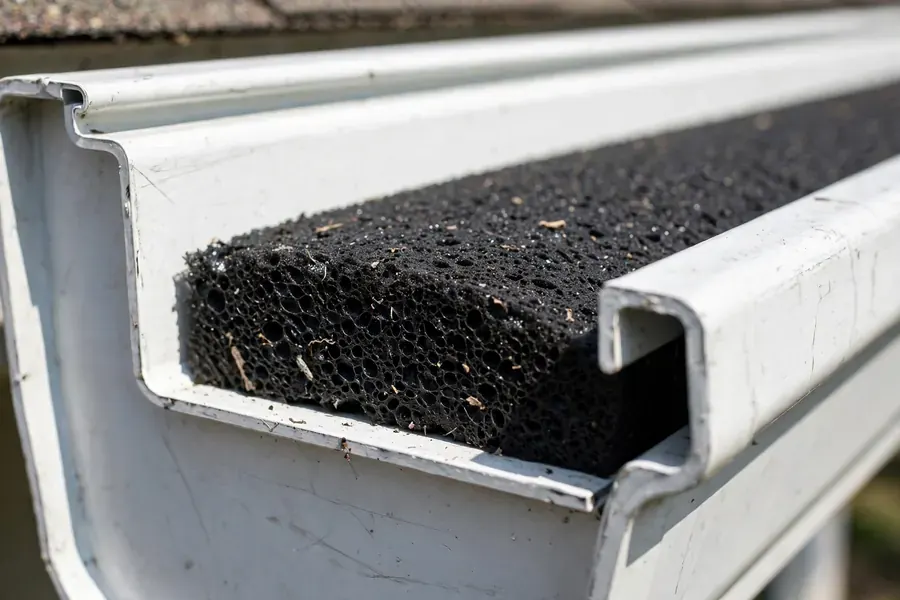
Foam and brush inserts we won’t install, and we’ll tell you why if you ask: foam is a sponge in 90-percent humidity — it holds moisture against the metal, grows algae and seedlings, and rots the gutter from the inside. Brush inserts trap oak tassels in the bristles and turn cleanout into surgery. Both are cheap, both look clever in the box, and both create the problems guards are supposed to prevent.
Matching the Guard to Your Roof and Your Street
Tile roofs need guards that install under the first course without lifting tiles or breaking the water channel — micro-mesh frames do this; heavy cover systems that screw through the roof edge don’t belong on tile. On metal roofs, thermal movement matters: the guard’s expansion rate should match the roof’s, or fasteners work loose by the second summer.
Salt air narrows the field fast. Within a few miles of the lagoon and the ocean — South Hutchinson Island, the island neighborhoods, the riverfront — plain steel screens and carbon-steel fasteners corrode. Stainless mesh with aluminum frames and stainless fasteners is the specification that survives; anything less is a three-year guard on a twenty-year gutter.
And the street matters: a home buried in live oaks in Indian River Estates needs maximum debris blocking; a new build west of the Turnpike with young landscaping can run a simpler setup. When we quote, we walk your lot, look at your trees, and recommend for your actual conditions — not the average of Florida. That’s also why we publish what guards cost here before you ever call.
Keep exploring
Related Gutter Services in Fort Pierce
Picked your guard type? Here’s what to read next:
Gutter Guards
Our guard installations: stainless micro-mesh systems on clean, sound troughs — what guards do, what they don’t, and an honest assessment of your roofline.
Learn moreGutter Guard Cost
Treasure Coast market ranges per linear foot, what drives the price up or down, and when guards pay for themselves versus cleanings.
Learn moreSeamless Gutter Installation
Guards belong on sound gutters. If yours are undersized or aging, a new 6-inch seamless system with guards is the combination that ends overflow for good.
Learn moreKnow Your Guard Type? Let’s Talk.
Tell us your roof type and your trees — we’ll tell you which guard actually fits, what it costs, and whether your gutters are worth guarding. Call Fort Pierce Gutter Pros at (772) 262-4370.
Prefer to talk it through? (772) 262-4370
Common questions
Fort Pierce Gutter FAQs
For most Fort Pierce homes, stainless micro-mesh: it blocks oak tassels, pine needles, and roof grit while handling our cloudburst rainfall, and it doesn’t corrode in salt air. Screens are a fair budget pick on clear lots; we don’t recommend foam or brush inserts in our humidity.
Yes — micro-mesh frames install under the first tile course without lifting tiles or disturbing the roof’s water-shedding design. Avoid heavy cover systems that screw through the roof edge on tile; they can break the water channel tiles depend on.
Micro-mesh will — its open area stays large enough for two-inches-an-hour downpours. Reverse-curve covers can overshoot in extreme volume, which is one reason we don’t recommend them here. No guard changes the fact that undersized gutters still need upsizing first.
Once a year, as an inspection and rinse. Fine pollen film and silt still wash through micro-mesh over time, and surface debris on top of the mesh should be brushed off. That’s one visit instead of three or four cleanings.
Not in Florida. Foam absorbs our humidity, holds moisture against the metal, and grows algae and seedlings — we’ve removed foam inserts that were composting inside the trough. They’re cheap to buy and expensive to regret.
Stainless micro-mesh: 20-plus years, roughly the life of the gutters underneath. Plastic screens UV-degrade in our sun in 5–10 years. The guard should never outlast — or underlast — the gutter by much; match the investment to the system.
If the gutters are sound — correct pitch, solid fascia, no widespread corrosion — yes. We inspect first and won’t install guards on a failing system; guarding gutters that need replacement is good money after bad.
Hole size and support. Micro-mesh apertures are measured in microns — needles and grit can’t get through — mounted on a rigid frame that preserves flow. Regular screens have visible perforations that needles spear and grit washes through, and flexible screens sag under debris load.